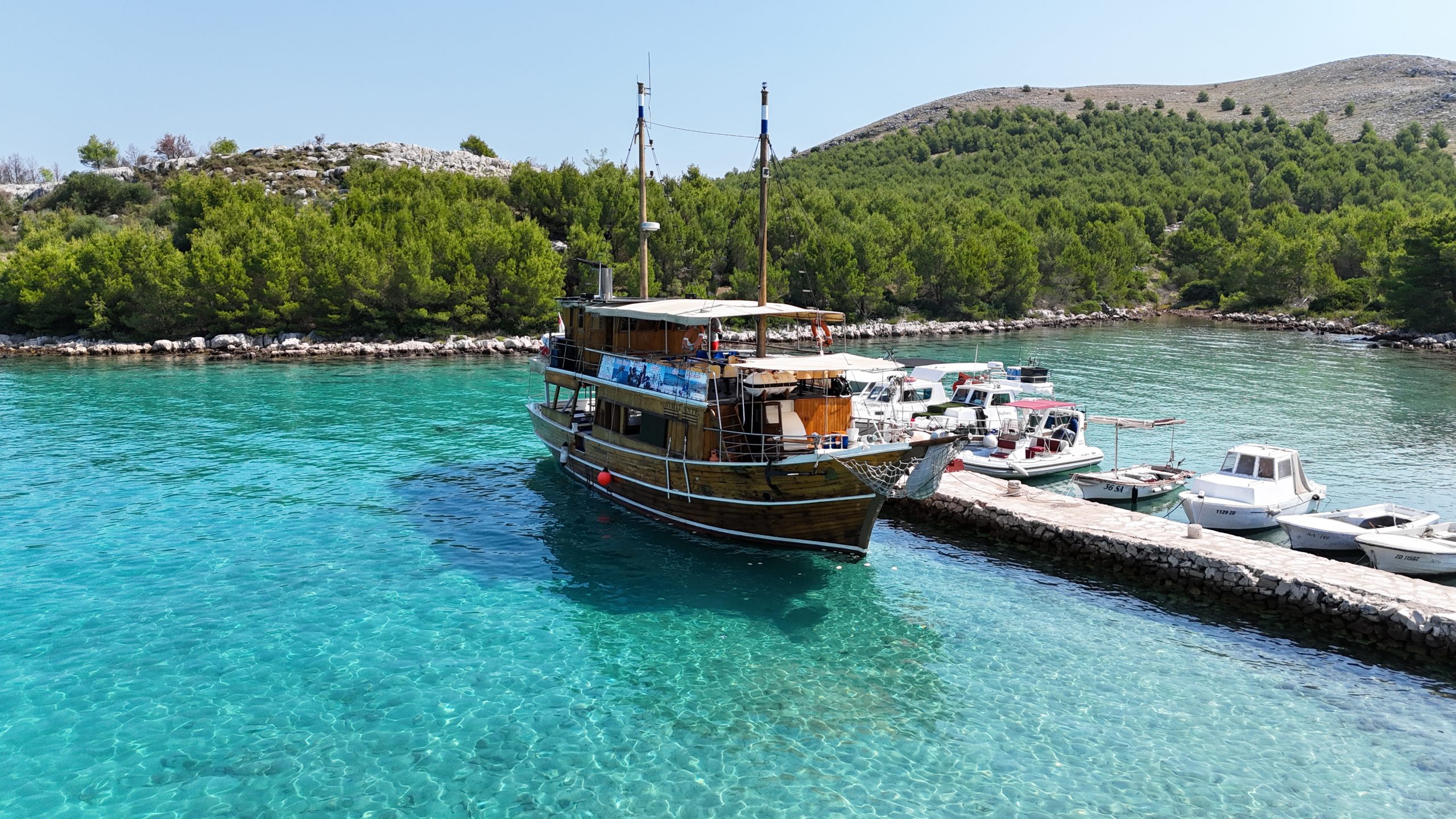


Unlike many fortified cities whose walls today are accessible only with an entry ticket, Zadar’s walls are an open stage for everyday life of its inhabitants and tourists. The art historian Pavuša Vežić, whom locals consider a walking encyclopedia of the city, says that this may be the greatest advantage of Zadar’s fortifications compared to, for instance, Dubrovnik’s—because they remain public spaces for gathering, without paid tickets or wristbands. The inhabitants of Zadar haven’t turned their walls into a museum display or historical backdrop—here, history is not preserved in amber; it is truly a part of daily life. In short, these are walls that do not look down on their city.
There are cities that grow within their walls and cities that outgrow them. Zadar has never been either. It simply lives—through its walls.
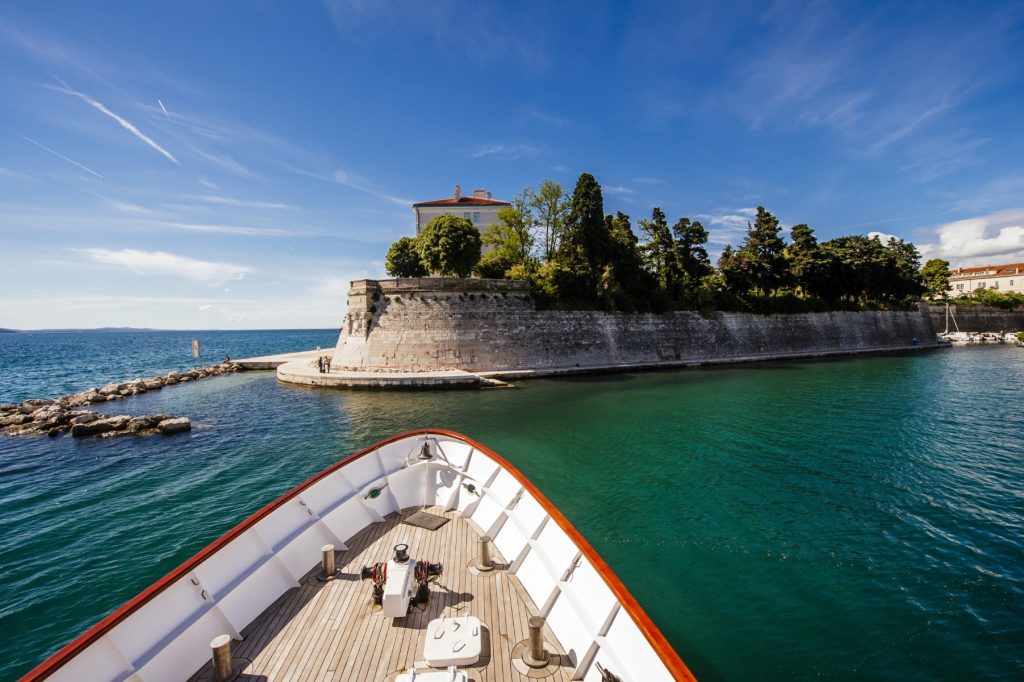
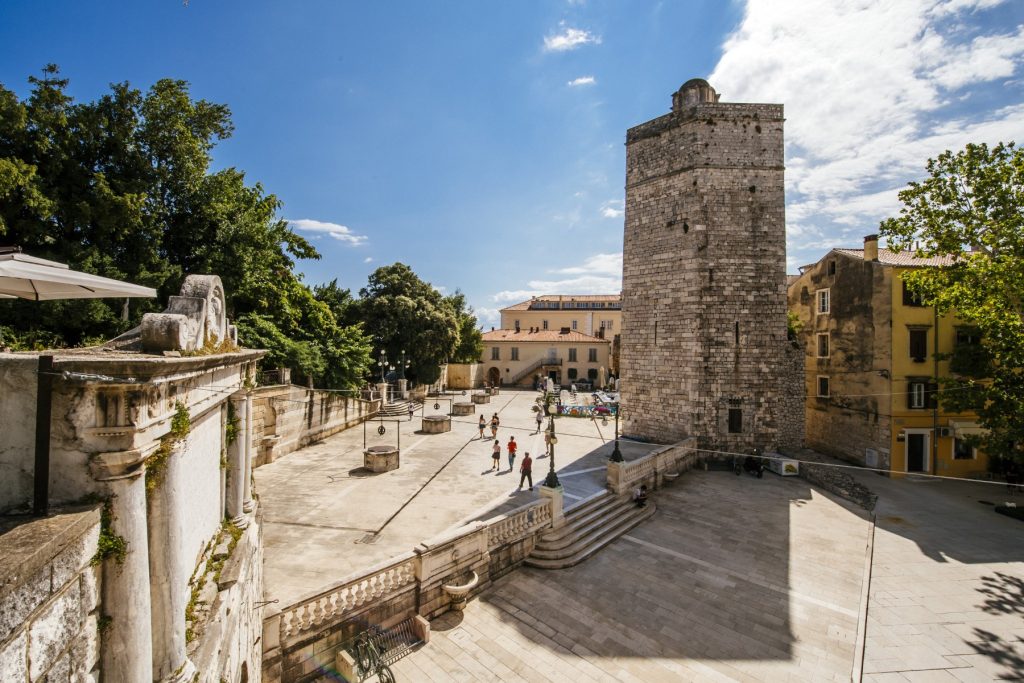
Their story doesn’t begin abruptly, but like a stone dropped into the sea, it creates ripples. The first ripple was Roman. Even then, the city received its fundamental urban structure—a regular street grid, gates, and walls. The next wave came in the 12th and 13th centuries, when a strong ring of medieval fortifications was built, along with towers—of which only one survives to this day: the one at Five Wells Square. The third wave of fortification, from the 15th to the 18th century, came with the famed Venetian Republic, when Renaissance walls were adapted to new warfare tactics and more powerful enemy cannons.
In the late 19th century, part of this strong walls was demolished to build the seafront promenade and what is now the University of Zadar building. “Today, that would never be allowed,” says Professor Vežić, reminding us that “heritage is not always lost to war, but also to human negligence.”
For centuries, the Zadar walls protected the city and its people from those who sought to conquer it. Today, they no longer serve as a boundary but connect this fascinating city with the rest of the world—while still protecting its most vital essence: its soul. Thanks to its walls, Zadar became part of the UNESCO World Heritage family in 2017, alongside five other components of the grand Venetian defense system from the 16th and 17th centuries in Croatia, Italy, and Montenegro.
As part of that fortification, a canal called Foša once brought seawater through Zadar’s Queen Jelena Park, with a built-in system of cisterns. Even today, five wells remain there as quiet testimony that the walls protected the city not only from enemy cannons, but also from thirst.
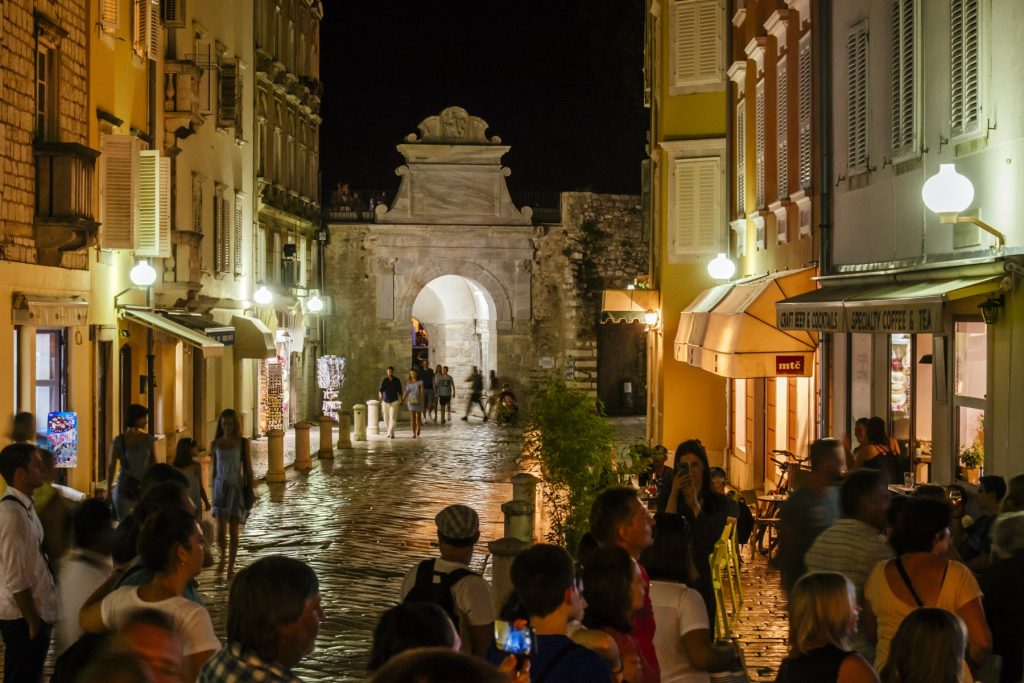
The Land Gate from the 16th century, which was once the only entrance to the city, is the most impressive part of Zadar’s walls. This masterpiece by the famous Venetian architect Michele Sanmicheli is wrapped in a charming legend: whoever walks through the central gate with closed eyes and makes a wish—it will come true. Above that main entrance, the ever-watchful lion of Saint Mark, the symbol of the once-glorious Serenissima, looks on.
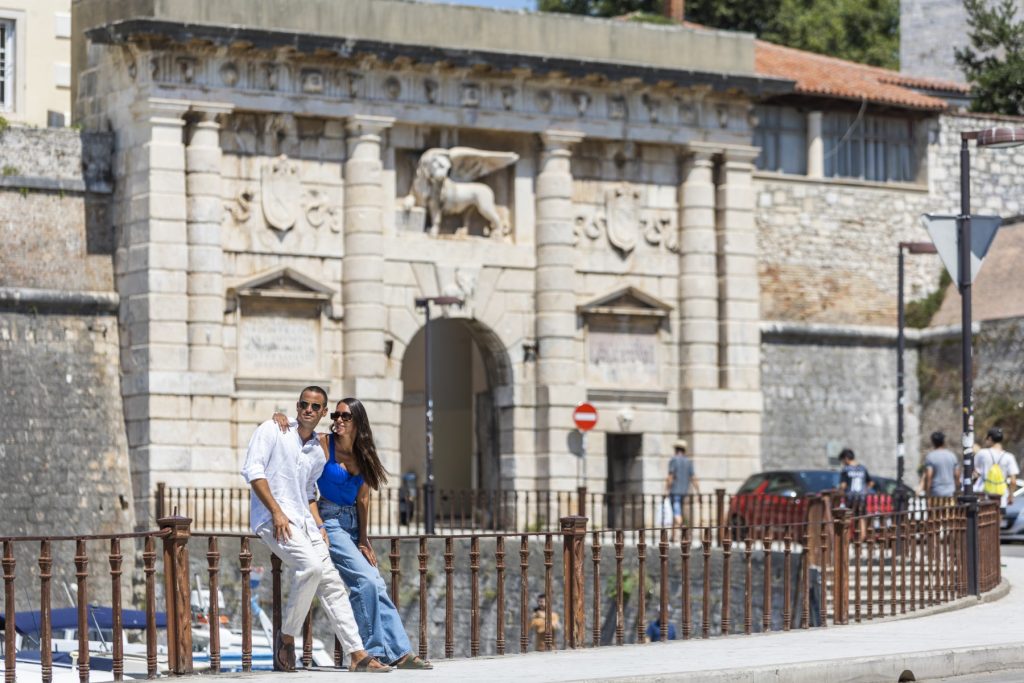
As Zadar’s citizens rebelled against Venetian rule eleven times in history, the walls are now known as the Walls of the Zadar Uprisings—symbolizing their brave spirit and resilience.
A city that has slept for centuries within the safe embrace of its walls now preserves them with pride and affection. In 2020, several kilometers of this stone shell were restored with European support to preserve this outstanding monument of “alla moderna” maritime fortification for future generations.

Zadar’s people have remained true to their belief that the value of heritage lies in its openness and harmony with everyday life. That’s why the major restoration in 2020 never aimed to detach the walls from the city and its people, but rather to return them as quickly as possible.
Just as you can always return to them—and experience that enchanting fusion of past and present-day life in a city that has endured for more than three thousand years… More